




Examples of Employee Strengths (and Weaknesses) for Reviews


When we’re talking about leading companies, the first thing we think about is their product. But what is behind a successful market position? Any wise manager will say—it’s the staff. All the specialists are key elements who literally build the brand. So when you pay attention to people—help them improve skills and work on weaknesses—you make a long-term investment in the company’s growth.
We explored examples of people’s abilities and are glad to share what to focus on in your journey to improvement.
What are employee strengths?
Before you start thinking about what your team is good at, first, look at the definitions.
When people talk about strengths, they mean the abilities, skills, and natural talents they can bring to the company and perform well.
Also pay attention to what are technical and soft skills. While the first ones refer to something like software proficiency, the second ones are what matter to us more here today. The most in-demand competencies include teamwork, communication, collaboration, and others.

Therefore, employee strengths are simply the qualities that allow individuals to complete their tasks efficiently and effectively.
Why is it important to develop employee strengths?
When you develop talents, you create a win-win situation for both the company and the individual.
Stronger teams & collaboration
If team members are aware of each other’s strengths, they know whom to ask for advice. Such collaboration will be a lot easier and more effective.
Strong collaboration happens when people can easily share updates, discuss tasks, and stay aligned. Team collaboration and communication software gives your team that shared space without relying on scattered emails and chat apps.
Increased performance & productivity
You are always better off completing a task that you're good at. So, when an employee knows their objective assessment, they are usually more willing to learn from their mistakes. This way, with some training, for example, they might turn a weakness into a strength or simply improve a skill they’re not so good at.
More employee retention & engagement
When someone is happy and feels that he is valued, he will be, naturally, more engaged. As you can easily understand, these employees will be more committed to their job roles and will prefer to keep working in your company.
Enhanced innovation & problem solving
When you develop your team's strong points, you’ll end up with a very diversified workforce in the company. This will definitely be a plus in terms of innovation, creativity, and problem-solving.
How to identify employee strengths and weaknesses
There are different strategies to find out what each specialist is good at.
Choose whatever you like. Just keep in mind that you need to have a full picture of what the team is doing.
#1. Performance reviews & feedback sessions
One of the things that you can do is to conduct these types of sessions on a regular basis. The best way to do it is by using a platform that allows all employees to talk openly and freely about others' traits.
In these sessions, you should ask open questions—not simply with possible yes or no answers.
You may use the following wording:
- What projects or tasks do you feel more confident working on? Why?
- What kind of work gives you more energy?
- In which areas do you believe you need more support or you feel that you’re struggling most?
- Can you name some activities that you usually avoid or that you find frustrating?
- If you could choose one strength that you wish to improve this year, which one would you choose?
- What kind of feedback have you been getting from customers and other employees?
#2. Skills surveys & assessments
Another strategy that you may use to identify strong sides are surveys and assessments. These formats can help you measure communication skills, problem-solving abilities, and technical knowledge.
#3. Get feedback from peers & observation
In the first case, you just need to pay attention and look at the way employees collaborate and interact. You’ll notice interesting patterns, such as who’s the one that takes the first step to solve an issue. Or who is better in written communication, among many other things. But you should also take the time to get feedback from peers to make sure that you get a complete perspective.
When you decide to implement these strategies, you’ll see that you’re ending up with a very comprehensive picture of an employee’s strengths.
List of employee strengths and weaknesses examples
One of the most important things in what comes to identifying employee strengths is that they can show up in many different ways.
For example, some employees may be great at negotiating, while others may have incredible organization.
Just by observing their behavior, you may notice that some of your employees are true leaders while others are detail-oriented.
No matter what you discover. Keep in mind that when you understand work advantages, you’ll be more qualified to hire new specialists in order to build better, stronger, more diverse teams.
Let’s first look at our list of employee strengths examples:
1. Communication
There’s no question that communication is key in any organization. Remember that this doesn’t only involve talking clearly; it also includes having good writing skills.
Simply put, when good interaction exists, everyone will be on the same page, encouraging collaboration and, at the same time, reducing misunderstandings.
Example: When an employee role includes interacting with customers, he needs to know how to “read” the customer—what he wants, needs—and take care of all his concerns.
2. Teamwork
For many projects, teamwork is crucial. When colleagues aren’t working towards the same goal or don't even concern themselves with others, projects will most likely fail.

In a successful business, it’s important that specialists are supportive and that they can work seamlessly.
Example: When a team member has to complete a specific task but is struggling to do it in time, a colleague will offer help. They’ll both complete the task and share the credits.
3. Collaboration
Any successful business has teams from different departments communicating and interacting effectively.
Example: It’s normal that the sales and marketing department needs to work together many times. The first can give clues about what customers are looking for. As a result, the marketing team will be able to create more targeted campaigns that bring more sales.
4. Leadership
It is a person who can guide, motivate, and inspire others. These people are usually asked to set an example. They encourage employees to take initiative and look at challenges from a different perspective.
Example: A marketing department wants to increase customer loyalty. One of the team members asks to try new tactics with highly personalized offers. He conducted research and presented real data. Don’t suppress his initiative/ Let him show his ideas and unlock leadership potential.
5. Ownership
It is also often called accountability. It is a skill that holds you responsible or accountable for everything that you do. Especially when you make a mistake.
To take responsibility means you’re simply assuming that not only you failed again but learn from it to ensure that you don’t do the same in the future.
When an employee has this attitude, the colleagues know they can count on him, which ends up building better, stronger relationships.
Example: A subordinate made a mistake, and the manager noticed it. Instead of giving excuses, the specialist took responsibility for what he did and asked the manager what he could do differently to prevent this from happening again.
6. Problem‑solving
With these skills, it’s easy not only to identify problems but also analyze them and find the right solutions.
There are always changes in the workplace, challenges that need to be addressed. A person with such strength can approach these issues and fix them in a short period of time, minimizing disruption.
Example: Just think of your customer support staff. While most of the questions they’re asked are usually the same, there may be a few questions that need to be addressed quickly to guide customers in the right direction. They need to be quick-thinking individuals.
7. Critical thinking
This is another crucial advantage. You’ll see it in action when an individual can look at one situation and see different perspectives. But he goes even further. This specialist is also able to make sound judgments that are essential for the decision-making process.
Example: There is the need to create a marketing campaign for the launch of a new product. One specialist is able to look at this situation and consider not only the features of the product but also the needs and wants of potential customers. This person will be able to suggest different ideas that can be used in this marketing campaign to increase both sales and engagement.
8. Time management

It is one of those strengths that is very important in all aspects of life. After all, it refers to the ability of avoiding procrastination, meeting deadlines, and prioritizing tasks.
Example: A project manager will assign each task to a specific team member to ensure that everything is complete on time and that the project meets the deadline.
9. Organizational skills
This is a skill that includes different aspects, from completing tasks to prioritizing, meeting deadlines, and managing their time effectively.
When someone has these characteristics, he is a lot more productive. He stays focused on what he is doing and may even multitask when needed. In addition, he transmits a sense of trust and confidence to the rest of the team.
Example: When the manager keeps the files of a project organized, with clear deadlines, and detailed task lists.
To stay organized, he may use tools like Flowlu to structure activities, track progress, and keep everything in one place—so everyone can quickly find what they need for work.

Here are some 360º feedback weakness examples from peers
#1. Communication
The individual may take a lot of time to answer to his colleagues.
Example: “Sometimes, you’re slow on answering the team and this becomes especially hard when the deadline is tight.”
#2. Time management
People may struggle with deadlines, prioritizations, or both.
Example: “Sometimes you experience some difficulties in prioritizing tasks which leads to failing deadlines."
According to various estimates, about 60% of employees waste working hours because they don’t have clear deadlines. Check whether your managers always set clear timelines for completing tasks and have convenient tools to track and prioritize activities.
#3. Delegation
When it takes a lot of time to delegate tasks.
Example: “Instead of delegating tasks at first, you start by taking all the responsibilities on your own.”
#4. Adaptability
Some specialists have more problems adapting to different realities.
Example: “You may need more time to adjust to some changes that are required.”
#5. Attention to detail
Each team member may overlook errors.
Example: “Sometimes, you miss some details that need more work.”
#6. Feedback acceptance
Everyone needs to be more open and receptive to feedback.
Example: “Sometimes, you don’t seem to be open to constructive estimation which may make discussions and collaborations more challenging.”
#7. Initiative
Recent stats show that more than 70% of people are disengaged at work. So, it’s not a surprise that some people wait for directions.
Example: “You usually wait for instructions when you could take the initiative and identify next steps.”
Identifying both aspects is not the end. The next step is to turn weaknesses into development plans.
Let’s imagine that one of your subordinates has problems with time management. You can come up with a plan with clear recommendations, like using some task tool to help meet deadlines and prioritize his activities.
Use these employee review examples of strengths to write clearer and more impactful performance evaluations.
Key strengths of an employee for appraisals
The most important thing when you’re writing key strengths is to make sure they are clear, specific, and results-focused. You should avoid simply listing generic qualities and try, instead, to show how the strength is demonstrated and the impact it creates.
When you know key strengths of employee examples, you can create clearer appraisals—more balanced, and actionable.
Here’s how you should write them:
Step #1. Clear strength statement
You should begin by naming the strength directly.
For example, “You show good communication skills..”
Step #2. Describe the behavior you observe
Now explain how you observed the employee showing this strength in their daily work.
For instance, “... by actively listening to his peers and presenting his ideas clearly...”
Step #3. Highlight the impact
In this stage, it’s time to explain to others why this specific strength is important for both the team and the organization.
You might say, “... which reduces misunderstandings and helps get everyone on the same page.”
If you put it all together, you’ll end up with something like: “The specialist shows good communication skills by actively listening to his peers and presenting his ideas clearly which reduces misunderstandings and helps get everyone on the same page.”
You should follow these same 3 steps for all the other strong points. If you’re unsure what to highlight, these strengths of an employee example can guide your feedback.
How to use strengths and weaknesses examples in practice
It is not just about showing revealed pros and cons. It’s about how you communicate and turn them into action. Here’s how to apply both strengths and weaknesses in real workplace situations:
In one-on-one meetings
These conversations are always informal and are mainly focused on support and growth.

Maintaining a dialogue is crucial to make sure that the employee is at ease and that he doesn’t feel pressured. You may take the time to ask him about his best characteristics as well as the skills or tasks he feels that he needs more support.
When talking about advantages, you need to reinforce what the person is doing well and provide him with an example related to the current work.
It can be something similar to this:
“Your communication skills are getting better every day. They helped you clarify expectations with the team and made sure that the project was running on time to meet the deadline.”
In terms of disadvantages, you need to keep low-pressure and be supportive. There’s no point in being critical or too judgmental; just focus on improvement instead.
Here is a simple example:
“I have been noticing that some of the projects have been delivered right on the deadline. While this is ok, we can do better. Let’s try to work a bit more on task prioritization to ensure that we don’t miss a deadline.”
Examples of key strengths of an employee is a great basis to build productive dialogue during the meeting.
In feedback sessions (real-time or 360º feedback)
These sessions often include input from multiple people and usually deliver results faster.
Here, you need to be timely and specific to make sure everyone knows exactly what you are talking about.
For example:
“You showed great professionalism and good problem-solving capabilities when you handled that client issue yesterday.”
When talking about poor sides, you need to use balanced, constructive language.
For example:
“Collaboration is very important, and one simple way of improving it is to simply ask for others' input in group discussions.”
In formal performance reviews
When you are the one responsible for promotions, evaluations, or compensation, you should consider formal performance reviews. These are usually more structured.
Link each strength you mention to measurable results and business impact.
For instance, you might say something like:
“Since your organizational skills, we were able to deliver all projects on time this month.”
In terms of problem sides, you want to make sure that you are honest but constructive. Therefore, including a development plan is always a plus.
You might say:
“We believe that team efficiency needs to be improved and one thing that can help is delegation. This should be a priority.”
In evaluations & development plans
This is where feedback turns into growth. To measure it properly, you should rely on SMART goals (Specific, Measurable, Achievable, Relevant, and Time-bound).
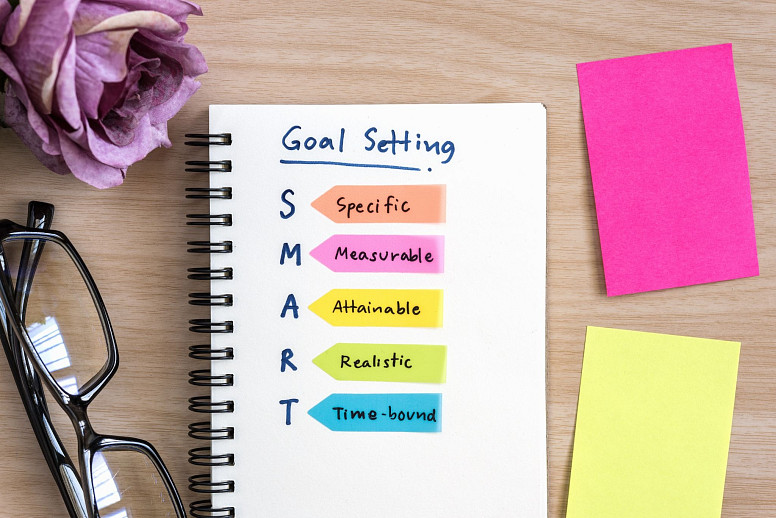
You should use successful cases to show how your employee’s career can evolve.
For example:
“From what we have seen so far in terms of leadership, we will give you a lead role in the next project.”
Commenting on weak sides, you should make sure that you set clear, trackable goals.
For example:
“We believe that you need to focus on time management. Therefore, we will define some planning sessions over the next weeks and we’ll review your progress on a monthly basis.”
Use examples of employee strengths for performance review to make your evaluations more balanced and effective
Unlock your team’s potential
It is crucial to integrate both sides of analytics into regular and continuous work in the company. Only these tactics bring long-term success.
No matter the strategy or approach you use—formal evaluations, feedback discussions, or one-on-one meetings, these need to be meaningful.
The ultimate goal with listing examples of employee strengths and weaknesses is to get more motivated, productive, capable, and focused—that can help your business attain your goals.
Anyway, always support your colleagues and stay in close touch, even with outsourcers. With modern platforms, you can create a trusting space not only within an office, but also in a digital environment.
For example, Flowlu has many tools for interaction. With multiple channels such as comments, feeds, messengers, email, and third-party integrated apps, you can always provide constructive feedback. Arrange one-to-one meetings or simply send words of support to any team member.
You can also track tasks to see where a person delivers strong results and where they may need help.
Be close to your team and build a truly trusting environment within a well-organized workspace.

FAQ
Strengths are abilities and natural talents employees have. They include two main types of skills: technical and soft.
The first ones are software expertise or data analysis, for example, while the second ones are teamwork, communication, critical thinking, among others.
When talking about strengths, it’s better to refer to soft skills. Some examples include communication, collaboration, organizational skills, ownership, problem solving, critical thinking, among others.
Strengths help achieve results faster and with more confidence. Weaknesses, on the other hand, reveal areas where support, training, or better processes are needed.
When you understand both, you can balance them in a practical way. Consider your weak sides as opportunities and use them for learning something new.
Managers can use different methods. For example:
- Direct observation in the workplace
- Peer feedback
- Skills assessments
- Performance reviews
Although in our article we reveal more characteristics, the main 5 can be:
- Communication
- Teamwork
- Problem-solving
- Time management
- Adaptability