



What Is a Project Charter in Project Management?

- Project Charter Definition
- Why a Project Charter Is Important
- The 10 Key Components of a Project Charter
- Project Charter Examples
- How to Write a Project Charter Step-by-Step
- 4 Tips & Best Practices for Writing a Good Project Charter
- 8 Common Mistakes to Avoid When Writing a Project Charter
- Keep Your Plans Clear

While you’ve probably already heard about this document, you may not fully know its definition or main components. In this article, we explain why every company should create one. We’ve also prepared simple examples so you can easily draft your own.
Let’s get started.
Project Charter Definition
When asking what is a project charter, the answer lies in its role as a guide for project objectives and stakeholders.
A charter can be simply defined as a formal document that includes several key components: its purpose, goals, scope, key tasks, and the people responsible for the deliverables. You can see it as an instruction that keeps team members in sync from day one.

Each participant can turn to it at any time since it serves as a roadmap. The document doesn’t only serve as a guide for all decisions regarding the work, but also ensures that everything stays on track.
A clear project charter definition helps teams understand the purpose and scope of a project from the start.
What Is a Project Charter in Project Management
It can be seen as the foundation for successfully realizing an idea in project management. Everyone—team members, managers, stakeholders, or any other sponsor—can check this convenient document at any time.
Ultimately, it serves as a plan for the project. Referring to it helps each participant ensure they’re on the same page and moving in the same direction.
PMI & PMBOK Project Charter Definitions
The definition of a project charter may vary depending on the sources. Let’s review some of the most authoritative ones.
According to the PMI (Project Management Institute), “the project charter is used as a reference throughout the project to ensure that the project scope does not change.”
From this pmi project charter definition, we can see that the document is usually written once the case is presented to stakeholders. Only when it receives approval does it serve as the official green light to start work.
Notice that the ready papers need to be signed by sponsors since this is the proof that he will be responsible for all the necessary financing.
Within the PMBOK Guide, this foundational form is seen as “a document issued by the project initiator or sponsor that formally authorizes the existence of a project and provides the project manager with the authority to apply organizational resources to project activities.”
Furthermore, the definition implies that it should provide or reference:
- The requirements
- The business needs
- A summary schedule
- The assumptions and constraints
- The business case, which should also include ROI (return on investment).
According to the project charter definition PMBOK, it is a key document that outlines a project’s purpose and stakeholders.
Why a Project Charter Is Important
A clear project charter meaning ensures that all stakeholders are aligned on project goals and expectations.
Planning records deliver formal acceptance, allowing the work to begin and business resources to be used.
Here are the main reasons why this document is so important:
Shows the Value of a Project
Besides including all the different details about works, it will also show the link between objectives, needs, and goals of the company.
Keeps the Team Informed
It’s very important that all team members are well aware of the goals and objectives. Each participant needs to be informed from day one regarding the estimated timeline, scope, and key deliverables, among others.
Establishes a Timeline
Having a timeline is crucial for successful completion. However, sometimes the schedule is only communicated to internal and external stakeholders once work begins. Since the timeline is so important, the project charter helps set clear expectations for it.
Creates a Link to Portfolio Management
Portfolio management is a way for companies to measure the success of all business initiatives against the goals and objectives of the entire organization. Since the document creates a direct link between the work and the objectives it supports, it becomes much easier to identify not only successful initiatives but also areas that need improvement.

Defines the Project Success Criteria
As you already know, to determine the success of undertakings, you need to follow some criteria. This is done by clearly detailing expectations and the metrics you’ll use to measure the results.
Prevents Scope Creep
Unfortunately, many work streams continue to experience scope creep. The reality is that such a problem contributes not only to delays but also to poor outcomes and budget overruns. However, this can be prevented by using an initiative plan since the scope and goals are clearly defined from the very beginning.
The 10 Key Components of a Project Charter
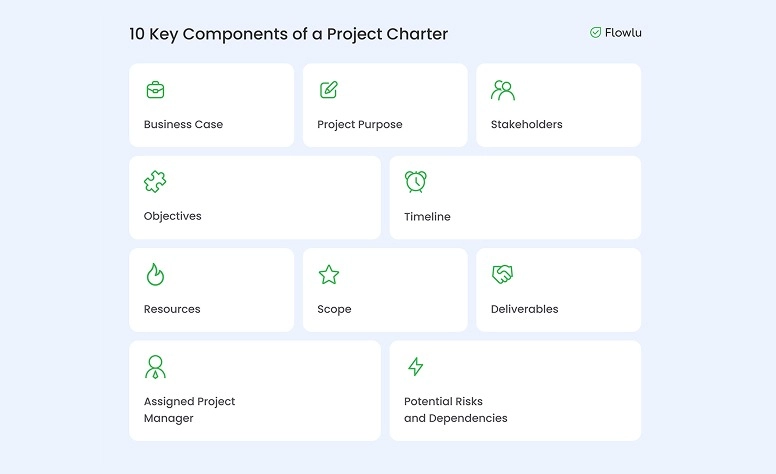
When you’re looking to create a guiding document, remember that you need to include some elements. While these can vary depending on the types of work and company, the following are the most important components:
#1. Business Case
It addresses how the specific undertaking can actually serve the company’s goals and objectives with its deliverables and outcomes. It should also show the benefits it will bring to the business as a whole.
Ultimately, it should clearly show the value of the project.
#2. Project Purpose
Always include in your plans why the work is being done by explaining the problem it will address.
#3. Stakeholders
These people should be seen as everyone who is tied to the idea realization and who will be updated about it. They may include investors, decision-makers, third-party contractors, or even customers.
#4. Resources
These are assets your team needs to complete tasks. Resources include software, technology, productivity tools, charts, and more.
#5. Scope
In other words, all the work that needs to be done to complete the project. This covers the objectives, deliverables, and boundaries. The main goal of defining a scope is to make sure that all the expectations are clear and prevent creep.
#6. Deliverables
It’s what stakeholders can expect when the work is complete. It may be a report, a document, a new product, or many others.
#7. Objectives
These are the goals that the project should achieve.
#8. Timeline
The timeline is used to determine milestones for the workflow.
#9. Potential Risks and Dependencies
Managers should consider it even before execution begins.
#10. Assigned Project Manager
The charter needs to also include the name of the employee responsible for the project. You should also make sure that you include their duties, role, and authority.
Project Charter Examples
Example #1: BrightPath Solutions Project Charter
Project Name:
“AI-Powered Productivity: Smarter Workflows for Modern Teams” Virtual Workshop
Description:
A 90-minute live virtual workshop featuring two automation specialists and one operations strategist, designed to demonstrate practical AI tools that improve team efficiency.
Business Case:
This initiative supports BrightPath Solutions’ strategic objectives of:
- Increasing qualified inbound leads by 35% in Q2
- Positioning BrightPath Solutions as an authority in AI-driven workflow optimization
- Expanding our email subscriber list by 2,000 new contacts
Deliverables:
- Branded registration page with integrated CRM tracking
- Promotional campaign (email + LinkedIn + paid ads)
- 90-minute live virtual workshop
- Downloadable resource guide (PDF toolkit)
- On-demand replay hosted on our website
Benefits:
- Stronger brand credibility in the automation space
- Growth in marketing-qualified leads
- Evergreen content asset for ongoing promotion
- New partnership opportunities with featured experts
Risks:
- Low registration turnout due to market saturation
- Speaker scheduling conflicts
- Platform instability during the live event
- Limited internal experience running paid webinar ads
Budget:
Maximum allocation: $5,500
Milestones:
- Speaker contracts finalized: March 12, 2026
- Registration page live: March 20, 2026
- Promotional campaign launch: March 25, 2026
- Final slide deck approved: April 18, 2026
- Live workshop date: April 24, 2026
- Replay published: April 26, 2026
Team Members:
- Project Lead: Morgan L.
- Marketing Strategist: Elena P.
- Creative Designer: Isaac D.
- Automation Specialist/Speaker: Priya N.
- Operations Strategist/Speaker: Daniel H.
- Event Moderator: Claire T.
- Paid Media Manager: Victor S.
- CRM & Email Manager: Hannah W.
Example #2: GreenWave Marketing Project Charter
Project Name:
“Sustainable Brands Summit 2025” Hybrid Conference
Description:
A half-day hybrid (in-person + livestream) conference bringing together sustainability leaders, brand strategists, and eco-entrepreneurs to discuss responsible marketing practices and green innovation trends.
Business Case:
This project supports GreenWave Marketing’s strategic priorities of:
- Increasing enterprise client acquisition by 20% in the next two quarters
- Strengthening brand authority in sustainable marketing
- Building strategic partnerships with at least five eco-focused organizations
Deliverables:
- Event branding package (logo, theme, digital assets)
- Conference website with ticketing functionality
- Sponsorship proposal deck and outreach campaign
- Speaker lineup (6 keynote + 2 panel discussions)
- Livestream production and recording
- Post-event highlight video and recap blog
Benefits:
- Expanded professional network within sustainability sector
- Increased sponsorship revenue
- Enhanced media visibility and PR opportunities
- Repurposable content for social media and thought leadership
Risks:
- Lower-than-expected ticket sales
- Sponsor withdrawal or reduced funding
- Technical issues with hybrid streaming setup
- Venue capacity or logistical challenges
Budget:
Maximum allocation: $18,000
Milestones:
- Venue secured: June 10, 2026
- Speaker confirmations complete: July 5, 2026
- Sponsorship outreach launch: July 12, 2026
- Event website live: July 20, 2026
- Marketing campaign launch: August 1, 2026
- Conference date: September 18, 2026
- Post-event report published: September 30, 2026
Team Members:
- Event Director: Alicia M.
- Sponsorship Manager: Darren K.
- Marketing Lead: Sofia R.
- Creative Designer: Mateo L.
- Technical Producer: Jordan C.
- Logistics Coordinator: Priyanka S.
- Content & PR Manager: Olivia T.
How to Write a Project Charter Step-by-Step
To write your own planning document, you first need to gather insights from different people and then put everything down on the paper. Here are the steps you need to take.
Step #1: Determine the Purpose & Project Scope
In this first step, you will need to connect the purpose of the idea to the business case and define its deliverables, boundaries, and exclusions.
Step #2: Define Project Goals & Objectives
Now is the time to specify the different goals and objectives. Ensure that they are SMART—specific, measurable, attainable, relevant, and time-bound.
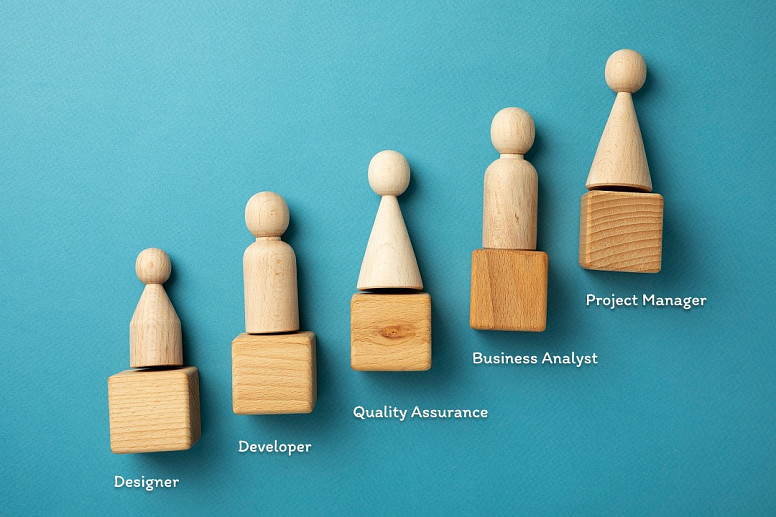
Step #3: Assign the Project Manager & Team Members
In this step, you need to state who is responsible for completing the work. Also, clarify the roles and responsibilities of the team members.
Step #4: Project Schedule
This is when you should take care of determining key deliverables and major milestones.
Step #5: Timeline and Budget
When you create a timeline, it will be important to identify the most significant dates and milestones. But more than this, you should also include the estimated financial resources for this project.
Step #6: Potential Risks
The step you can’t miss. You need to make sure that you identify all potential risks that may affect the success of the results. It’s significant not only to describe possible challenges and uncertainties but also to explain how you will handle and mitigate them.
Step #7: Get the Formal Authorization
When you’ve already had all the details, you only need to get the final approval and authorization. Have the document signed by either relevant stakeholders or governing bodies, depending on the work.
4 Tips & Best Practices for Writing a Good Project Charter
Even if this is the first time you’re writing a plan, we’re confident it won’t be difficult at all. Here are some tips and best practices to consider:
Project Title
It may seem evident, but many people overlook it. A title is an integral part of any document, and a project charter is no different.
Don’t Forget the “What” and the “How”
You need to answer questions such as "What is this project about?”, “What results are you looking to achieve?”, “How do you plan to achieve those results?”. Without clarifying these issues, no one will know what they are working toward.
Leverage the Resources Available
When you are writing your project charter, you should consider the company’s resources available. It gives you a better understanding of the work and its context. You may also check previous initiatives and files that might help you improve your current document.
Don’t Ask for Authorization Immediately
Don’t hurry when completing the project charter. First, make sure you haven’t missed any details or important information. It’s always a good idea to leave it for a day or two and then revisit the document. You may also ask someone else to read it to get a fresh perspective.
8 Common Mistakes to Avoid When Writing a Project Charter
Writing a project charter is not difficult. However, to make your document clear and accurate, try to avoid common mistakes.
#1. Information Overload
On the one hand, the main idea of creating a planning framework is to give a clear overview of the work from beginning to end. But on the other hand, you may find yourself with an information overload. Ultimately, you need to look for all the data that is relevant and necessary without making the document complicated or confusing. When in doubt, keep only the essential information.

#2. Too Many Details
This problem comes along with the previous one. In what concerns the initiative brief, you need to focus on high-level information rather than including a lot of details. Remember that your document should be easy to read and serve as a reference for now and the near future.
#3. No Stakeholder Involvement
Make sure you always include stakeholders. Missing them may lead to many problems in the near future. For example, potential conflicts and misaligned expectations.
#4. Mix the Elements
Above, we’ve shown you the different elements that a project charter needs to include. Make sure you don’t mix them since it may make the document confusing.
#5. Vague Goals and Undefined Scope
Previous mistakes can lead to scope creep and confusion. To prevent misunderstandings, don’t forget to link the project’s boundaries, goals, and purpose.
#6. Inadequate Identification of Potential Risks
When you don’t clearly address potential risks and ways to mitigate and manage them, it may lead to unexpected issues and problems during the work.
#7. Overly Ambitious Schedules and Budgets
Doing this means setting up the initiative for failure. You should always ensure that both timelines and budgets are realistic and achievable.
#8. Not Revisiting the Document When Needed
Sometimes, it’s necessary to revisit the initial document. While a project charter is intended to remain stable, you may need to make adjustments or add clarifications. Failing to do so can lead to misaligned expectations and confusion.
Keep Your Plans Clear
While using a project charter isn’t mandatory, it is, without any question, very important. This tool manages to aggregate all the information regarding the work, including scope, purpose, and key stakeholders.
Along with this article, we detailed all the elements you should include in your planning and provided a step-by-step guide to help you write one.
Finally, we delivered some tips and best practices and shared some of the most common mistakes people make when creating a brief description of an initiative.
No matter if you’re about to write your first project charter or have already written these documents before, keep in mind that they lay a strong foundation for successful planning and execution.
Companies with a large project load can benefit from creating ready-to-use templates and automating their distribution to all participants. This is made possible with the help of specialized software. Flowlu is one example.
The platform is designed for project management needs, providing all the essential tools to streamline work and keep it under secure control. With its Document Module, users can quickly create, customize, edit, and distribute any type of document to inform employees, stakeholders, and clients about the company’s initiatives.
If you value having everything in its place, try virtual storage where no plan is ever lost or forgotten.

Project charter definition: It’s a formal document that includes several key components of a project, such as its purpose, goals, scope, key tasks, and the people responsible for the deliverables.
Project Management Institute defines it as the project charter that is used as a reference throughout the project to ensure that the project scope does not change.
In most cases, it's written by the project manager, who has the help of a high-end executive.
When you first write a brief plan, it’s supposed to remain that way until the completion. If you change it without a reason, you may end up changing its scope unintentionally, for example.
However, when the goals or the scope of the project change, there is an obvious and strong reason to edit the initial document. In fact, if you don’t edit it, you are left with a document that doesn’t have anything to do with the current situation anymore.
While there are many ways to share the document with your team, we believe the best approach is to host a kickoff meeting.
During the meeting, you can present the idea, answer questions, and allow time for everyone to review the details.
By sharing this document with your team, you provide a reference they can consult and discuss before the work actually begins.