







What is CRM in Digital Marketing?


CRM in digital marketing refers to how businesses use customer relationship management systems to collect, organize, and use customer data across marketing channels. It helps marketing teams track interactions, understand behavior, and run more relevant digital marketing campaigns.
In practice, CRM connects customer data from websites, email marketing campaigns, social media, and sales touchpoints into one system. This allows marketers to segment audiences, personalize communication, and measure the impact of their campaigns more accurately.
When used well, CRM marketing supports everything from lead generation and lead nurturing to customer retention and repeat purchases in digital marketing. Instead of treating each campaign as a one-off effort, marketers can build ongoing relationships based on real customer data.
What Is CRM in Digital Marketing?
CRM in digital marketing is the practice of using a customer relationship management system to manage customer data, interactions, and communication across digital channels. For marketers, CRM acts as a central place where information about leads, customers, and their behavior is stored and updated over time.
A CRM system helps marketing teams track how people interact with a brand through websites, email marketing campaigns, social media, and paid channels. This data makes it easier to understand where leads come from, how they move through the funnel, and which digital marketing efforts lead to conversions.
CRM marketing focuses on turning this data into action. Instead of sending the same message to everyone, marketers can segment audiences, personalize campaigns, and time their communication based on real behavior. This approach is especially useful for lead nurturing, retention, and repeat purchases.
In short, CRM for marketers connects customer data with day-to-day digital marketing work. It helps teams run more consistent campaigns, maintain context across touchpoints, and make decisions based on measurable results rather than assumptions.

What Is CRM Marketing?
CRM marketing is a marketing strategy that uses data stored in a CRM system to plan, run, and optimize digital marketing campaigns. Instead of relying on assumptions or one-time interactions, CRM marketing is built on customer history, behavior, and engagement across channels.
In this context, a CRM marketing strategy defines how customer data is used to guide segmentation, personalization, and automated communication across digital marketing channels.
At its core, CRM marketing connects customer relationship management with everyday marketing work. Marketers use CRM data to understand who their audience is, how they interact with the brand, and what type of communication is most relevant at each stage of the customer lifecycle.
A CRM marketing strategy typically supports the following tasks:
- Segmenting audiences based on behavior, interests, or lifecycle stage
- Personalizing messages across email marketing campaigns and other channels
- Supporting lead generation and ongoing lead nurturing
- Improving customer retention and repeat purchases
- Running upsell and cross-sell campaigns based on past activity
When CRM data is combined with marketing automation, teams can scale these efforts without losing context. This makes CRM marketing especially useful for small and mid-sized businesses that need consistent, data-driven communication without adding manual work.
How Does CRM Work in Digital Marketing?
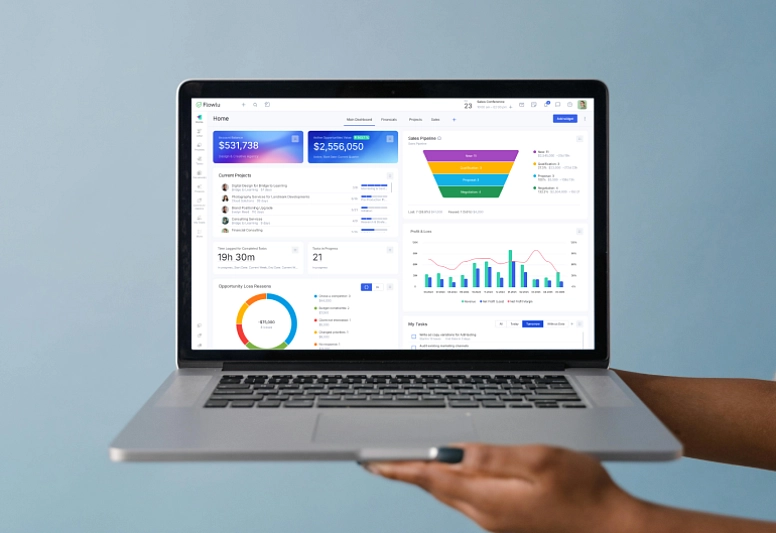
CRM works in digital marketing by collecting customer data from multiple touchpoints and turning it into structured input for campaigns. Instead of working with disconnected tools, marketers use CRM software to manage data, plan communication, and measure results in one place.
Below is how this process typically works in practice.
Collecting and Centralizing Customer Data
CRM systems collect data from websites, forms, email marketing campaigns, social media, and sales interactions. This includes contact details, lead sources, page visits, email opens, and past purchases.
By centralizing this information, marketers no longer have to rely on spreadsheets or separate tools. All customer relationship management data stays connected and updated as interactions happen.
Segmenting Audiences and Tracking Behavior
Once data is collected, CRM helps marketers segment audiences based on behavior, interests, location, or lifecycle stage. For example, leads who visited pricing pages can be grouped separately from newsletter subscribers or existing customers.
CRM for marketers also makes it easier to track how contacts move through the funnel. This visibility supports better targeting and more relevant digital marketing campaigns.
Personalizing Campaigns and Journeys
CRM marketing allows teams to personalize communication instead of sending the same message to everyone. Segments can receive different emails, offers, or follow-ups based on their actions and history.
This is commonly used in lead nurturing and retention campaigns, where timing and relevance matter more than volume. Personalization helps keep communication consistent across channels without adding manual work.
Measuring Results and Improving ROI
CRM systems track campaign performance alongside customer data, making it easier to measure results over time. Marketers can see which campaigns lead to conversions, repeat purchases, or long-term engagement.
This data supports better decisions around budget allocation, messaging, and automation. As a result, CRM marketing automation helps teams improve ROI and reduce wasted effort across digital marketing activities.
Benefits of CRM in Digital Marketing

Using CRM in digital marketing helps marketing teams move from isolated campaigns to consistent, data-driven communication. Instead of guessing what works, marketers can rely on customer data to guide decisions across channels.
Key benefits of CRM marketing include:
- Higher conversion rates: CRM data helps marketers target the right audience at the right time, which improves response rates across digital marketing campaigns.
- Better lead nurturing: By tracking interactions and behavior, CRM supports structured lead nurturing instead of one-off follow-ups.
- Improved customer retention and loyalty: Personalized communication based on CRM data helps maintain long-term relationships and reduce churn.
- Lower customer acquisition costs (CAC): Better targeting and segmentation reduce wasted spend on irrelevant campaigns.
- Higher customer lifetime value (LTV): CRM marketing supports upsell and cross-sell efforts by using past behavior and purchase history.
- Time savings through marketing automation: Automated workflows and templates reduce manual work while keeping communication consistent.
- Clearer ROI measurement: CRM systems connect campaign activity with results, making it easier to track return on investment.
Challenges of Using CRM in Digital Marketing
While CRM in digital marketing offers clear benefits, it also comes with challenges that marketing teams need to address early.
- Data entry: CRM marketing depends on consistent data input. Without automation or clear processes, manually updating customer records can become time-consuming, especially as contact lists grow.
- Data accuracy: Inaccurate or outdated data reduces the effectiveness of segmentation and personalized campaigns. This makes it harder to rely on CRM insights when planning digital marketing campaigns.
- Data security: CRM systems store sensitive customer relationship management data, so protecting access and permissions is essential. Businesses need to ensure compliance and prevent unauthorized use.
- Adoption and training: A common challenge is getting marketers to actually use the CRM system. Without proper onboarding and clear workflows, CRM tools risk becoming underused or ignored.
Modern CRM software helps reduce many of these issues through automation, predefined templates, and integrations with marketing tools. Platforms like Flowlu, for example, combine CRM, email marketing, and automation features in one system, which makes adoption easier for marketing teams and small businesses.
CRM Marketing Use Cases and Campaign Examples
CRM marketing is most effective when it is applied to specific campaign types. Below are common digital marketing scenarios where CRM systems help marketers work more efficiently and deliver more relevant communication.
Email Campaigns and Newsletters
CRM systems store subscriber data, engagement history, and preferences, which helps marketers send targeted email marketing campaigns instead of generic newsletters. Audiences can be segmented based on past opens, clicks, or website activity, improving relevance and engagement.
CRM marketing automation also makes it easier to schedule follow-ups and track performance across multiple email campaigns.
Lead Nurturing and Drip Campaigns
CRM is widely used for lead nurturing, especially when leads require multiple touchpoints before converting. Marketers can create drip campaigns that respond to actions such as form submissions, page visits, or content downloads.
By tracking behavior inside the CRM system, teams can adjust messaging and timing based on how leads interact with digital marketing campaigns.
Cross-Sell and Upsell Campaigns
CRM data makes it easier to identify existing customers who are likely to be interested in additional products or services. Purchase history, usage data, and previous interactions help marketers create targeted cross-sell and upsell campaigns.
These campaigns are more effective because they rely on real customer behavior rather than broad assumptions.
Win-Back and Re-Engagement Campaigns
CRM marketing is also useful for re-engaging inactive contacts. Marketers can segment customers who haven’t interacted with recent campaigns and trigger win-back messages or special offers.
By tracking responses inside the CRM software, teams can measure which re-engagement efforts lead to renewed activity and retention.
How to Get Started With CRM in Digital Marketing
Getting started with CRM in digital marketing doesn’t require complex setups or large teams. Most businesses can begin with a few focused steps and expand over time.
- Define your marketing goals: Start by identifying what you want to improve, such as lead generation, customer retention, or customer lifetime value. Clear goals help shape how you use CRM marketing data.
- Connect your data sources: Collect customer data from key digital marketing channels, including website forms, email marketing campaigns, social media, and paid ads. Centralizing this data is the foundation of CRM marketing.
- Choose a CRM system: Look for CRM software that supports both customer relationship management and marketing tasks. For marketing teams, this usually means contact management, segmentation, email tools, and basic marketing automation.
- Set up segmentation and automation: Create simple audience segments and launch one or two automated campaigns, such as a welcome email or a lead nurturing sequence.
Even basic CRM marketing automation, such as automated follow-ups or triggered emails, helps marketing teams stay consistent without increasing manual work.
Platforms like Flowlu allow marketers to manage CRM data, run email campaigns, and automate communication in one place. This makes it easier to start small and build CRM marketing processes without switching between multiple tools.

FAQ
CRM in digital marketing is the use of a customer relationship management system to collect, organize, and apply customer data across digital marketing campaigns. It helps marketers track interactions, segment audiences, and personalize communication.
CRM refers to the system used to manage customer data and interactions. CRM marketing is the strategy that uses this data to plan, run, and optimize marketing campaigns.
Yes. CRM helps small businesses manage leads, track campaigns, and maintain customer relationships without relying on manual tools like spreadsheets. It also supports automation as marketing efforts grow.
CRM marketing is commonly used for email marketing campaigns, lead nurturing, upsell and cross-sell campaigns, and re-engagement efforts. These campaigns rely on segmentation, triggers, and customer behavior data.
Look for CRM software that combines contact management, segmentation, email tools, and basic marketing automation. Ease of use and integration with existing digital marketing tools are also important factors.
