



Types of Customers: A Complete Guide to Identification and Support


It probably isn't anything new to you that loyal customers usually spend about 60% more on your brand than first-time ones. And we sure you know that companies focus their marketing efforts on repeat purchases—not attracting new audiences. Why is it so? Because specialists understand the peculiarities of distinct groups. When you segment them strategically, you know how to engage with each effectively and grow business profit.
Every type is marked by its own communication styles, wishes, and expectations. You can't treat them all the same way—this approach only causes you to lose most of them.
In our guide, we'll show you how to identify each type. By the end of reading, you'll gain insights to develop targeted strategies to engage with everyone effectively and retain them.
Why Understanding Customer Types Matters
Even though everyone understands clients are crucial for any business, many of us still don’t know why it’s so important to have a full grasp of the topic.
These are just people who like your solution and buy it. However, when you have a business, you can’t afford to have such a simplistic view. The reality is much more complex.

We distinguish 4 main reasons why it’s important to recognize the uniqueness of diverse client groups:
1. Increase Sales
The top reason. The better you know your audience, the better you’ll handle them. Satisfied prospects are more likely to buy from you.
2. Personalized Service & Communication
When you learn each group's preferences, it will be easier to deliver more personalized service.
The knowledge that boost your interaction:
- the way people prefer to be reached
- the most convenient time for them
- the preferred tone of conversation (formal or friendly)
3. Improve Customer Satisfaction & Experience
This follows from the previous point. It’s a lot easier to make someone you know happy than someone you don’t.
The same works with buyers.
If you can identify each type, you’ll know exactly how to improve their experience and overall satisfaction.
4. Build Loyalty
Smart businesses invest in the long term.
Acquiring a new audience is much more expensive than turning an existing one into a repeat buyer.
So, build loyalty based on understanding each group.
The Main Types of Customers You Should Know
Here are the 5 more common groups you should to know about:
#1. Loyal
We mentioned that building loyalty is one of the reasons why you should know your clients. This is, without any question, one of the most important audiences you will find.
Loyal consumers are the cherry on top for businesses. They are the ones who love your company and your products, and can’t get enough of you. They keep buying regularly and like to refer your brand to their family and friends.
Take their opinion seriously. Ask for their feedback and input regularly. This will not only be good for your business, but they will also love being part of the decision-making process.
#2. Impulse Buyers
This category is guided by impulse. They don’t do a lot of research about your brand or similar ones on the market; they simply grab their card and make the spontaneous decision.
It’s very important to take them into consideration. Even though this audience may seem inconsistent, they are the second most important group for businesses, after loyal ones.
These buyers are usually open to recommendations, which means you can increase your earnings by continuing to offer them new solutions they may enjoy.
#3. Discount Seekers
A huge part of any business’s audience. The truth is, who doesn’t like good pricing? Well, these people just can’t help it. They know what they want since they have spent a lot of time researching the product. More importantly, they know how much they are willing to spend on it.
Seekers are always looking for the best deals, no matter whether they belong to your company or not. They aren’t loyal to any business—only to discounts. So, don’t even try to upsell or cross-sell to them.
#4. Need-Based
Those who are driven only by a specific purpose. They want something, so they quickly enter a shop and buy it.
They don’t look around for other items. They simply leave the store as quickly as they entered. As you can easily understand, they are difficult to upsell to, and they aren’t loyal either.
If you want to retain them, make sure you start off on the right foot with a positive and personal first interaction.
#5. Wandering
Also known as window shoppers. These people like to look around but rarely buy anything.

In most cases, they enter your shop or business to spend time or get out of the house, not with the goal of making a purchase.
They are usually looking for social interaction rather than a shopping experience.
Challenging Types of Customers and How to Handle Them
Some people are just hard to deal with but it is your job to treat them well. Here are the 3 most challenging groups and how to handle them:
The Indecisive Visitor
This represents the person who just can’t make up their minds. They tend to ask a million questions and, at the end, they usually make the wrong decision.
The best way to handle a situation is to not give them too many options and, when possible, tell what you would choose if you were in their circumstances or what most users tend to prefer.
To ensure they make a quicker decision, you may create some urgency but without being too pushy. Since this category is indecisive, reassure them that the risk of buying the item is very low. After all, there is a guarantee, support available, and a return policy in place.
The Angry or Frustrated Consumer
These types are usually upset about something. In some cases, they may have had a bad background and don’t want to repeat it again. The ultimate goal of them is to be heard no matter what. So, you may notice they will tend to raise their voices or express their opinions in a strong way.
The best way to interact is to remain calm and, above all, don’t take what they say personally. As we mentioned, they may be frustrated or angry about a past experience—not with you.
Just show them that you’re listening to them. Express your understanding and compassion. When they tell you why they are so upset, you should try to sincerely apologize even if it's not your fault. Then, you should offer a quick solution. Don’t forget to follow up with them to make sure that the problem was completely solved.
The Detail-Oriented Seeker
You will easily identify this person when he starts to ask specific questions and looking for in-depth information.
Since he’s used to gathering as much data as he can to make the decision, he may take a lot of time to decide whether he will buy it or not.
The best way to deal with such detail-oriented people is to know everything you can about the solution that you’re selling. And when you don’t know how to answer a specific question, you should know who to ask it to or where to look for the information.
Since they like precision, give them facts. You may show them the brochure of the product, for example. While you may feel that you should rush these visitors, this is something to avoid. They won’t buy unless they believe in your word, and patience takes time.
In case of a company-wide mistake, you can automate communication with a large group of unsatisfied customers via email. For example, you can create an apology template and set up bulk sending from your CRM.
3 Best Practices for Supporting
While there are specific approaches you should use to handle specific types of clients, there are also some common best practices that you may follow to help you support diverse groups:
1. Personalizing the Experience
If there is something that no one likes is to be treated as a number. All we want is to feel special, unique, and understood. So, this is what you should provide your audience with.
Step 1: Determine the group you’re dealing with. Just refer to the various types we showed above.
Step 2: Use the data you have. It helps you to answer all questions and requirements. Think of preferences and past orders, for example.
Step 3: Modify your tone and approach. For instance, and as we mentioned above, follow advice:
- Dealing with an indecisive one→ simplify choices
- Angry visitor comes → stay calm and show empathy
- A detail-oriented person interaction → be thorough
2. Training Your Support Team for Various Scenarios
Training is a very important part of the whole process, and it is what allows your employees to get better at identifying and dealing with buyers.
You should come up with a training where they can practice real situations like:
- Answer technical questions
- Communicate with indecision
- Deal with complaints
You may use a script to help them go through the situations, but, at the same time, don’t be too strict. Everyone has their own way to see and interpret things as well as communicate.

The training shouldn’t stop with role-playing. You should also take the time to teach your employees more about:
- Emotional intelligence
- Specifically tone control
- Empathy
- Active listening
At the end of the training, and with all these tools on their side, you should give your employees the room to solve problems by themselves, without always turning to you.
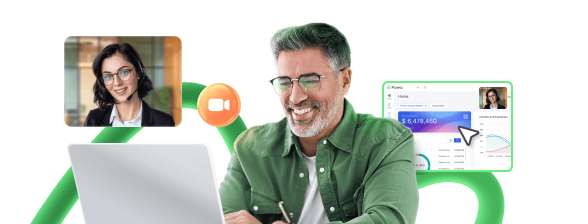
In Flowlu, you can use Project Templates to create courses for onboarding or training your staff.
3. Using Feedback
It’s one of the most powerful tools business owners have at their disposal. It’s completely free and can truly improve the way you do things within your company. Therefore, it’s important that you regularly ask for customers' opinion.
To collect it, you may decide to use:
- Chat rating
- Review system
- Surveys
- Several of these strategies combined
But your job is just starting here. Then, analyze data and look for patterns that may lead you to adjust training, processes, or even improve your current products.
Don’t forget to reach out to everyone and thank them for their review by letting them know that their opinion led to improvements.
How to Identify Each Type in Your Business
Turn to patterns regarding what they prefer, say, and do. As soon as you gather this information, it will be a lot simpler to work with clients.
#1. Analyzing Purchase History and Behavior
When handling customers, it’s more important to look at what they do rather than what they say.
For example, if you look at the buying frequency, you can say that you’re dealing with a loyal person.
On the other hand, if a visitor is a one-time buyer, he may be a discount seeker or just indecisive.
You may also look at the pending value. If someone spends a lot, he may be considered premium-focused.
On the other hand, if he doesn’t spend a lot of money, he may be more focused on his budget.
Also, look at the time the audience takes to make a decision. If they make quick purchases, they may be either impulsive or decisive. If the potential buyer takes too long to decide, he might be detail-oriented, for example.
#2. Collecting & Acting on Feedback
You may ask for insights through surveys, social media comments, support interactions, or even using a system of reviews and ratings.
After collecting it, analyze all the data gathered. For example, you may identify the most common complaints. They may be related to delays, confusion, not getting the right support, among many others. Also, you can discover what brings loyalty and satisfaction to your product or service users.
#3: Observing Communication Patterns & Preferences
The way we communicate says a lot about us.

Here are some of the cues to pay attention to:
- Tone & Style: When the person is brief and direct, he is showing that he is focused on results. Otherwise, if he is expressive or emotional, he is driven by experience. The detailed and analytical visitor is showing that he likes to focus on data.
- Preferred Interaction Channels: The way your product consumers prefer to communicate also shows a lot about them.
For example, if they prefer to use a chat, they are looking for quick answers. The email is preferred—they want detailed explanations. A phone to communicate—this indicates striving for personal interaction.
-
Response Behavior: When a person answers fast, you are dealing with a decisive and engaged one. On the other hand, if someone takes too long to give a reply, you may be dealing either with busy or cautious buyers.
Learn Your Customers
We started this article by saying that buyers are the center of your business. After reading it, we believe that you agree with us—especially about the importance of understanding the types you might serve. This is not just essential for your marketing campaigns; it is also important for growing your business.
Every client comes with their own preferences—unique needs, expectations, motivations, preferences, and behaviors. But, at the end of the day, you will be able to make all types of customers happy because you have learned how to identify them and how to handle each one of them.
If you don’t interact with your audience in person, like salespeople do in offline shops or cafes, it doesn’t mean you can’t learn more about them. Modern CRM allows interaction in a digital space as effectively as in real life.
For example, Flowlu has developed a special Client Portal within the system. It is not only a conventional channel to connect you with your customers, but also an advanced tool to track all interactions and project performance. Create a secure hub, update information, and collect data for future improvement. Make your interaction clear, honest, and highly personalized.
FAQ
When you do, you’ll encounter many advantages, including improved satisfaction, better conversation, and, ultimately, increased revenue.
You should look at interaction style and previous behavior. This way, you’ll be able to identify patterns.
Use emails, chat ratings, system reviews, and surveys.
Yes, they can. However, it usually takes time. For instance, a category might change due to needs, budget, or even experience.