



Brand Authority in Sales and the Role of CRM


Quick Answer
Brand and sales authority is an indicator of how highly your audience appreciates and trusts you. Roughly 80% of purchasing decisions are influenced by it.
When you're able to truthfully build this, potential buyers will easily identify your products, services, company name, style, logo, and even your "voice".
In our article we not only break down the importance of both aspects but also explain how a CRM can help you establish a strong reputation.
Brand Authority vs Sales Authority
When you understand what both concepts are, this allows you to act precisely.
What Is Brand Authority?
It's nothing more than being seen by people as the leader or expert in your field or industry. As you can easily understand, it's deeply related to how others perceive your trustworthiness, services, and reputation.
Notice that you can't say you either have brand authority or not at a specific moment since it's a continuous process.
What Is Sales Authority?
Instead of looking at all of it, you only study the person closing the deal. Simply put, it's the reputation and skill level of the salesperson.
4 Differences
To make it easier to catch the dissimilarity, look at the table.
|
Brand Authority |
Sales Authority |
|
|
Scope |
Organization itself |
How the sales rep performs |
|
Focus |
Awareness and reputation |
Logic and problem-solving |
|
Medium |
Social media, SEO, and marketing |
One-on-one meetings, emails, and demos |
|
Timing |
Start building from the top by creating awareness |
Start at the bottom with decisions |
The brand authority's influence ends when a customer is emotionally ready to move into personal interaction. If you remember the sales funnel scheme, these transitions occur between the consideration and purchase stages.
Where Are Brand & Sales Authority Also Connected?
When you're building the first, you're opening the doors to more customers. But you need high execution to close deals.
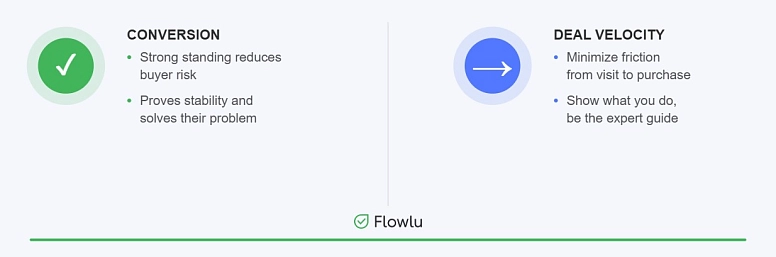
This is why they both affect:
#1. Conversion
When you have high standing in your industry, the perceived risk is drastically reduced. Buyers know your company won't go out of business tomorrow and that your solution meets their key decision criteria. In addition, they know the solution you're presenting is the right fix for their problem.
#2. Deal Velocity
You can measure it as the time from when a visitor enters your shop until they pay for your product.
To ensure this gap is minimal, you'll need to reduce any friction that might exist.
For example, you should focus on showing what you do—not who you are. In addition, your employee needs to be an expert and a guide for customers.
How Brand Authority Supports Sales Conversations
Although both types go their own way, the first one has a great influence on the second.
Why Buyers Respond Better to Trusted Brands
Imagine a company you know and trust. When you think about the business or their products or services, you're not skeptical. Instead of considering all the other options on the market, you take the shortcut and purchase from those who deliver stability and trustworthiness.
This is true even if the product or service from the company you trust costs more than the competition. You immediately assume you're buying a premium item from a leader, and it's completely justified. Strong brand positioning combined with effective sales enablement ensures that your team can confidently communicate this value to buyers at every stage.
Where Brand Credibility Ends and Sales Execution Begins
It's important to keep in mind that your brand's standing is static and, therefore, has an end.
- Even though someone may have the best impression of your business, they won't buy from you if the salesperson is dismissive, unprepared, or arrogant.
- While the initial step is already taken and the person may be willing to buy from you, you still need to make sure your product fits specific needs and address any objections they raise.
On the other hand, execution is dynamic. Your specialist needs to use the promise of the brand and then adjust it to everyone.
Notice that both don't always go hand in hand.
You might have built a strong reputation, but one bad interaction can undo it all. If a prospect deals with a salesperson who doesn't know the product, shows up late, or is unprepared, trust breaks instantly—sometimes in just 7 seconds.
How CRM Helps Teams Build Credibility
Most people assume that CRMs, or customer relationship management systems, are tools designed only for managers. But they're also great tools for salespeople. The amount of information gathered is huge, and it should be taken into account to improve conversions and strengthen your effectiveness at the same time.
Here's how CRM tools help teams master relationship building:
#1. Using Customer History
There's nothing worse for people than being asked a question they've already answered. And this is where a CRM comes in as a helpful tool.
With it, you can review past interactions with the customer, obstacles, and other pertinent information.
#2. Following-Up
Imagine you talked to a prospect on the phone and said you'd send them a PDF by email. If you fail to do so, the prospect will see this as a red flag. If you can't even remember to send a PDF by email, the product you're selling will likely fail as well.
To prevent this, you can use a CRM to set reminders.
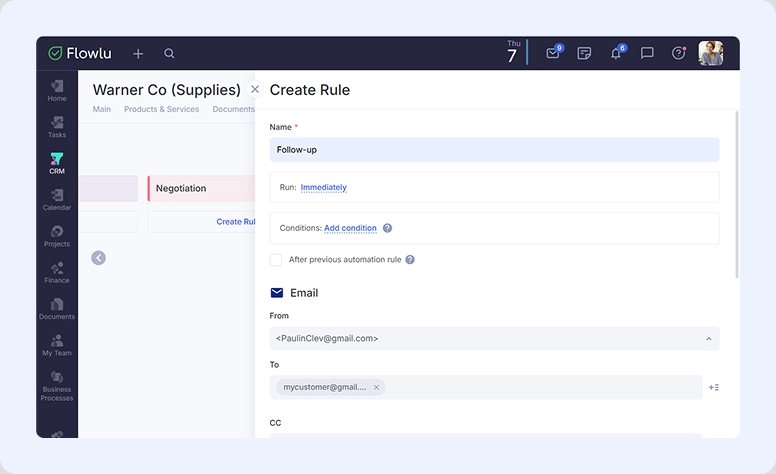
Flowlu lets you automate follow-ups. Create a custom or ready-made opportunity, choose the stage where your salesperson completes the call or meeting, and set up an “Email” action. The system will automatically send the necessary information to the contact right after the previous interaction is completed.
#3. Consistency Across the Buyer Journey
It only takes one inconsistent message to destroy authority. It's that fragile, and this is why you need to preserve it at all costs. And this can be easily done when you use a good system.
CRM Signals That Strengthen Trust in the Sales Process
A CRM system is a strategic tool that can be used for many roles. One of those is to make sure your salespeople are the perfect, professional consultants—not just the first person your business could find.
What Buyers Notice During the Journey
When people go through the journey, they're subconsciously scoring your reliability and whether they can trust you at all. Here are some of the things people notice that show you're doing a good job:
The Contextual Memory
When your representatives can refer to a specific detail mentioned on a call that occurred some time ago, the person will immediately feel valued. They'll see that they're being listened to and not just being sold to.
The Cadence of Competence
Timing is crucial. Whenever you say you'll send a recap email within 15 minutes and you do it, you're showing work excellence. In the client’s eyes, you have such a high level of organization that the product or service you're selling needs to be organized as well.
The Zero Repetition
When you call a company with a problem, you don't want to repeat the same thing to 2 or 3 different people. However, when you're using a CRM, a new person from another department can enter the conversation naturally and know what's happened so far.
The Proactive Insight
One of the main benefits of using a CRM is that you'll be more proactive. This might even allow you to reach out before a concern occurs. For example, you may be reminded about a customer who showed interest or that a contract renewal is near.
There's a lot that buyers can notice. But more than what they can see, it's important that you know how to measure brand authority.
5 Key Metrics to Determine Confidence
#1. Response Time (Lead-to-Call)
This metric measures the speed of service and shows that your priority is the buyer's time.
#2. Follow-Up Consistency
This allows you to measure reliability. It shows whether what's promised is delivered.
#3. Touchpoint Velocity
Used to measure engagement, it's related to timing. If you take too long to close a deal, you may be neglecting the buyer.
#4. Data Completion Rate
This measures the knowledge level of your experts. Whenever pain points aren't filled in, the representative isn't paying the attention they should be.
#5. Win or Loss by Stage Reason
This will help you measure the overall process health as it will identify exactly where trust is being lost.
How to Build Sales Authority with CRM in Practice
Change your attitude to CRM. Use it as a tool to know what should happen next.
Prepare Better Conversations with CRM Data
Review past interactions, notes, and deal history. Real data will help you prepare:
-
Call or meeting
If your data shows that most deals come from meetings, pay more attention to this type of interaction.
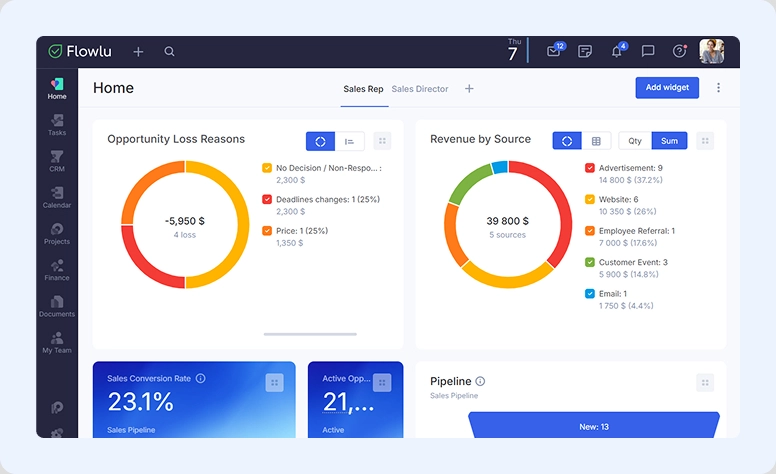
In Flowlu, you can create a custom dashboard to track performance and maintain pipeline visibility. For example, you can analyze the most common reasons for lost opportunities or identify which sources generate the most revenue.
-
Response objections
Study what caused delays or led to lost deals. For example, customers may not like delivery times or wholesale terms.
-
Consultative selling
Real cases and data allow you to offer more personalized solutions.
Step-by-Step Implementation
Here are the stages you need to take to turn your CRM customer data into a high-authority approach:
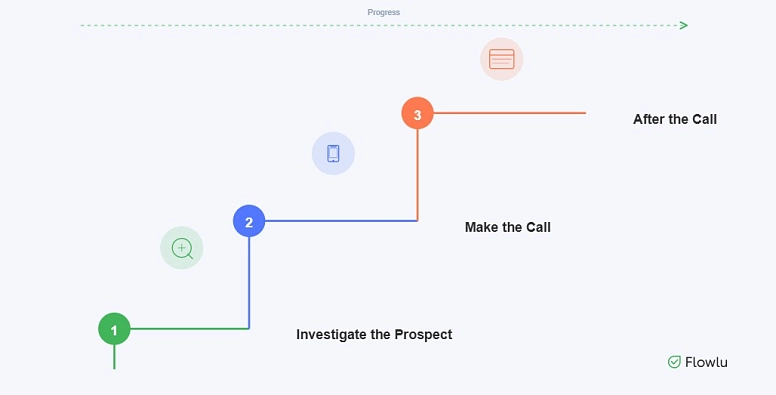
Step #1: Investigate the Prospect
Before you even think about reaching for the phone or Zoom, you need to take a good look at the stats in your CRM to learn how to improve brand authority signals.
Understanding the lead context—their industry, company size, budget, and previous interactions—helps you personalize your approach from the start.
Carefully inspect every detail about the potential buyer. From their activity history to the lead source, look at their interests and hobbies and any problem or suggestion that was mentioned.
Step #2: Make the Call
Now that you're talking with the prospect, your number one job is to immediately determine two things:
- What they want, why they want it, and what happens if they don't get it
- Take notes of the internal project names and any specific jargon that was used.
Step #3: After the Call
As soon as you end the call, summarize it immediately. Don't let anything else get in the way because you might forget to add something. Make sure you then send a follow-up to the prospect with your notes. For example, you might say something like: "Taking into consideration our latest conversation, we have identified 4 key hurdles. I've built the timeline in our system, and we should be able to deliver everything in December."
Many CRMs allow integration with telephony and other convenient third-party apps for client communication. Moreover, they log the details and start new processes.
For example, in Flowlu, after the call ends, depending on the selected scenario, a client card, an opportunity, and a task will be created. All information about the call will be recorded in the customer card.
When CRM Helps Most
The more complex a business is, the more important a system tends to be.
We distinguish three business models when a CRM tool delivers a higher return on investment (ROI):
Teams that Benefit Most from CRM-based Credibility Building
Growing Teams
It's easy for information to get lost when teams are growing. If you were working with just one other person, you could share all the information over coffee. However, this isn't the case.
When you hire new people for your business, they aren't aware of your brand's history. So it's wise to train them well before you put them in contact with leads. This will ensure consistency over time.
Teams with Many Leads & Touchpoints
It's the goal and dream of any business owner to have more leads than they can manage. However, you need to face the reality: an employee can't take on and keep track of more than 5 to 10 active leads at a time. If there are more, mistakes and missed details will appear.
This is where a CRM platform comes in. This tool can easily adjust sales communication. It tells each specialist who they need to call and why.
Businesses With Long or Multi-Stage Buyer Journeys
We're specifically referring to B2B leads that usually take between 6 and 18 months to convert. As you know, it's difficult to maintain momentum when circumstances around you keep changing. From stakeholders to budgets, and sometimes even the original pain point is forgotten. And when this happens, the deal is off.
However, when you're using a CRM system, you can use milestone tracking to help you maintain momentum with the prospect. Additionally, it ensures a smooth handoff between team members, so no context is lost.
5 Most Common Mistakes that Weaken Authority
It only takes one wrong message to undo years of trust-building. This is why it's so important to acknowledge the most common mistakes that may weaken loyalty.
Here's what you can do to avoid losing trust.
#1: The Checking-In Email
When specialists need to hit their goal, most turn to checking-in emails. These are emails that don't add or bring anything new to prospects or clients. The problem is that they can be damaging for the company itself since they show people that they aren't valuable.
Always ask your reps to add value in each follow-up they send.
#2: Over-Promising
When you're on the phone with a client and they keep asking about features and you answer yes to them all without hesitating, the client will feel that you're being dishonest. If you think about it, how can you be okay with all the features requested by a client? Instead, you need to be honest all the time.
When you don't have a feature the client asked about, just say you don't have it but also explain why.
#3: The Lack of a Next Step
Maintain control over the deal until you close it. So whenever you finish a call or email saying something like "Let me know when you talk to your boss about this," you're clearly throwing in the towel. If you notice, you're abdicating your authority, and the buyer will see this as a loss of confidence.
Before you write or say a similar sentence, you should have a process to guide the client. Tell them exactly what to do based on your customer data.
#4. Ignoring Discoveries
Unfortunately, many managers ignore discoveries. When they're talking to a client, they're simply annotating the client's answers to their questions, but they're not actually looking at them as they should. They're not building a customer relationship or engaging in any relationship-building process. People notice this, and they feel misunderstood and processed.
Consider summarizing what the buyer answered and asking them another related question to make sure you understood their point of view.
#5. Marketing & Sales Inconsistency
All teams within a company need to be in sync all the time. But when it comes to dealing with the audience, this is especially true for the marketing teams.
How would the client feel if they saw a campaign promising a high-tech, incredible experience, and the salesperson couldn't even remember the client's name? It's important to show authority in both departments.
Make sure both teams are always on the same page.
Build a Strong Brand
Loyalty is incredibly important for businesses nowadays. As you saw, the first works as the opening of the door by establishing industry trust, and the second is the one responsible for closing the deal.
To make sure your specialists can follow up with both prospects and clients, it's significant that they have a good CRM on their side. It reminds about all the details, helps follow up, and collects the data to close deals faster.
Flowlu gives all this support. Due to automation, you can catch opportunities right from emails or web forms and never forget to send what you promised to your clients. Salespeople can create a custom dashboard and share it with colleagues to track all essential stats in real time.
With Flowlu, no client will be missed and no opportunity detail will be lost.
FAQ
It's how buyers see the expertise of a representative. When you have low credibility, you're seen as a mere vendor. On the other hand, when you have high credibility, the audience considers you a trusted advisor.
The first reveals the credibility of the salesperson, while the second can be seen as the reputation of the company as a whole. Although both types work in different sales funnel stages, they influence each other and together create a powerful picture of your company.
A CRM system shouldn't only be seen as a tool for managers—it should also be used by salespeople. In fact, it can act as the memory of each employee to ensure they don't forget any details.
A good system takes routine processes on its own, freeing specialists for more important tasks and providing real data for future improvement.
Not only can they—they should. It's important to recall that small teams don't have a safety net. Therefore, it's crucial that their execution hits the mark over and over again.
Even if your team is composed of just two individuals, a CRM can help maintain the same voice, use follow-ups and reminders, and avoid any errors due to human intervention.
Some of the most common mistakes are:
- Sending emails without any value
- Inconsistent communication
- Asking for the same information again and again
It establishes your company as a trusted industry leader before prospects engage with your team. When you consistently provide valuable, relevant content, buyers develop confidence in your expertise and are more receptive to sales conversations.